
Choosing the right trading broker is one of the most important decisions a trader can make. The broker you pick can directly impact your trading experience, costs, and even the safety of your funds. But with so many options available, how do you identify a reliable broker?
In this guide, we’ll break down the 7 essential qualities every good trading broker should have — helping you make informed decisions and trade with confidence.
1. Regulation and Licensing
- A trustworthy broker is typically regulated by a recognized financial authority. Regulation ensures that brokers follow strict rules regarding fund safety, transparency, and fair-trading
practices. - Not all regulators provide the same level of oversight. They can generally be categorized into tiers based on the strictness of their rules and enforcement:
- Tier 1 Regulators – Highly Regulated: Authorities with strict rules, high capital requirements, and strong enforcement. Brokers under Tier 1 regulation are often considered more robust
and transparent. - Tier 2 Regulators – Moderately Regulated: These authorities maintain oversight but with fewer requirements compared to Tier 1. Brokers under Tier 2 regulation usually operate
safely, though traders should still review them carefully. - Tier 3 Regulators – Lightly Regulated: Authorities with minimal regulatory requirements or limited enforcement. Brokers licensed here may operate legitimately, but traders often
exercise additional caution. - Regulatory oversight, regardless of the tier, helps protect traders from scams, mismanagement, and unfair trading practices.
2. Transparent Fees and Trading Costs
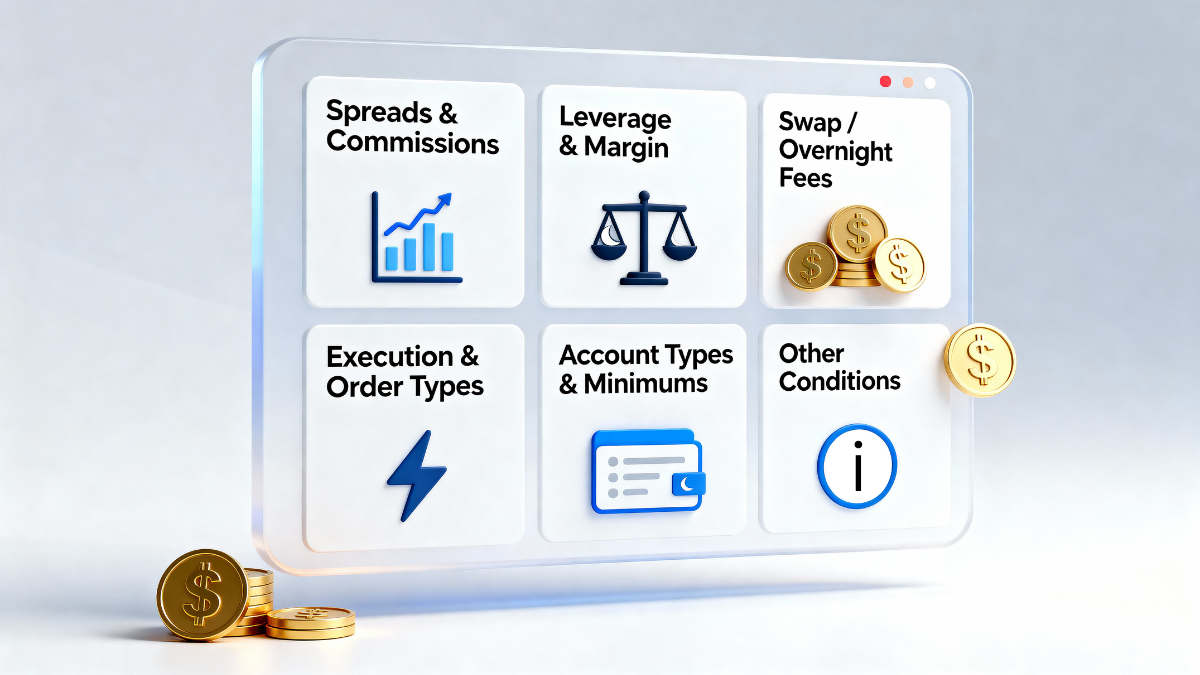
Good brokers clearly disclose spreads, commissions, swap fees, and withdrawal charges. Hidden fees can eat into profits, so transparency is crucial.
- Compare brokers’ spreads and commissions before opening an account.
- Ensure you understand all potential costs.
3. User-Friendly Trading Platforms
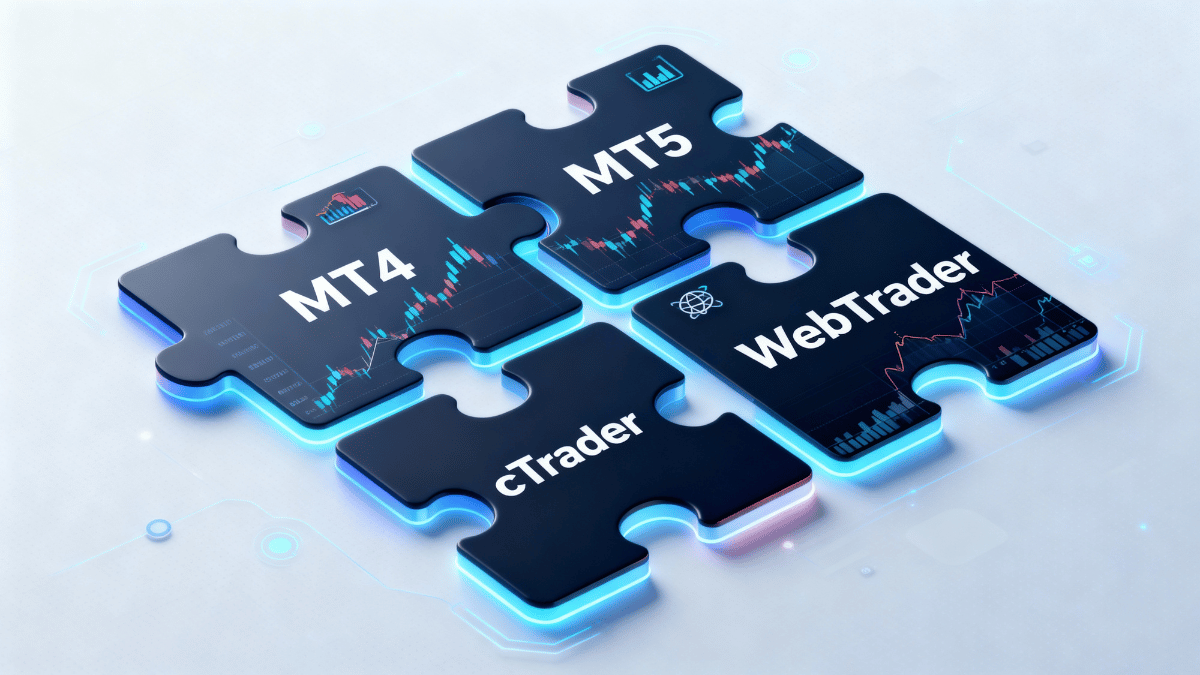
The trading platform is your primary tool, so it must be intuitive, stable, and feature-rich. Popular platforms include MT4, MT5, cTrader, and proprietary web/mobile apps.
- A good broker provides fast execution, charting tools, and mobile accessibility.
- Demo accounts allow you to test the platform before committing real money.
4. Fast and Reliable Execution
Execution speed matters, especially for active traders. Poor execution can result in slippage or missed opportunities.
- Look for brokers with low latency servers and high uptime.
- Read reviews or test demo accounts to gauge performance.
5. Strong Customer Support
Even experienced traders may need assistance. A reliable broker offers responsive and knowledgeable customer support.
- Multiple support channels (live chat, email, phone) are a plus.
- Check how quickly queries are resolved and if they communicate clearly.
6. Safety of Funds
The protection of your capital should be a top priority. Good brokers keep client funds in segregated accounts and use reputable banks.
- Some brokers also offer insurance or compensation schemes in case of insolvency.
- Avoid brokers with unclear fund management practices.
7. Positive Reputation and Transparency
Finally, a good broker maintains a positive reputation in the trading community and communicates policies openly.
- Check for user reviews, trading forums, and testimonials.
- Transparency in terms and conditions shows professionalism and builds trust.
Conclusion
Choosing the right broker can make the difference between a smooth trading experience and a frustrating one. By focusing on regulation, transparency, platform quality, execution speed, customer support, fund safety, and reputation, you can confidently select a broker that aligns with your trading goals.
Ready to find a broker that fits your needs? Start your search now: Find a Broker
Frequently Asked Questions (FAQs)
A trading broker is a financial intermediary that provides traders with access to markets like Forex, stocks, commodities, or cryptocurrencies. Brokers facilitate buying and selling while offering trading platforms and tools.
Regulation ensures that brokers operate under strict financial laws, keeping your funds safe and guaranteeing fair trading practices. Unregulated brokers pose higher risks of fraud or fund mismanagement.
Look for:
- Licensing from legal authorities
- Segregated client accounts
- Transparent fees and withdrawal processes
- Positive reviews and trader feedback
All seven qualities matter, but regulation, fund safety, and transparency are generally the most critical because they protect your capital and ensure a trustworthy trading environment.
Yes. Demo accounts allow you to test the broker’s platform, execution speed, spreads, and overall usability without risking real money.
Focus on key criteria: regulation, fees, trading platforms, execution speed, customer support, fund safety, and reputation.
Absolutely. A broker with a strong reputation usually provides reliable execution, responsive support, and transparency — reducing frustration and risk during trading.